
The Hermetic Order of the Golden Dawn: Secrets of Ritual Magic
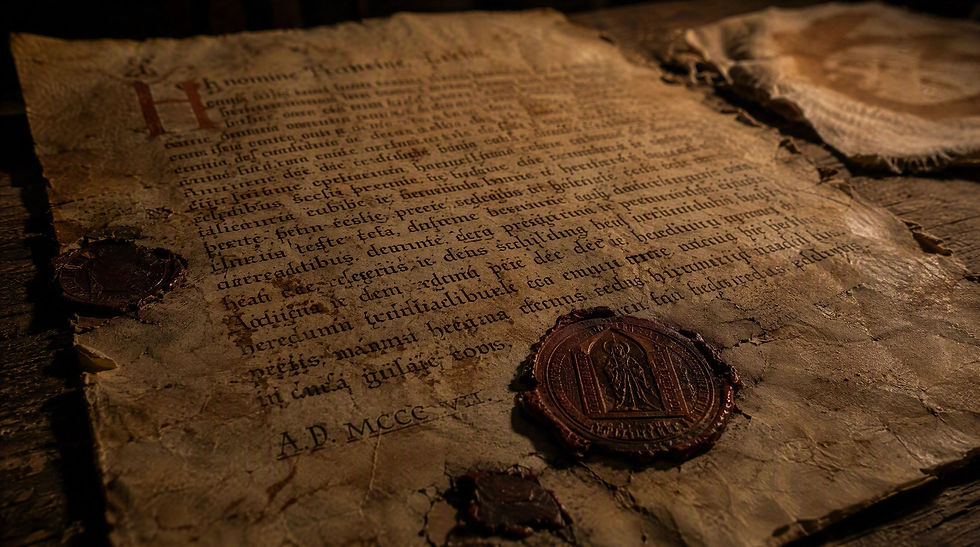
A middle-aged coroner’s clerk named William Wynn Westcott sat hunched over a cluttered oak desk in the smoky gaslight of a London office late in the summer of 1887. His fingers brushed against a stack of brittle, yellowed paper sheets that had been retrieved from the effects of a recently deceased eccentric. As he squinted at the faint brown ink. He realised the text was written in a complex cryptographic cipher that used the ancient shorthand of medieval occultists.
This specific archival discovery launched the public reality of the Hermetic Order of the Golden Dawn. A fraternity that completely transformed the landscape of Western occultism. For well over a century. Alternative researchers and fringe historians have debated whether this Victorian secret society tapped into a genuine line of immortal magical masters. Or if the founders simply orchestrated a massive literary hoax to give themselves spiritual authority. Did this group truly resurrect the ultimate formulas of high ritual magic from antiquity. Or did a collection of eccentric intellectuals just build a brilliant theatrical stage to escape the suffocating boredom of Victorian industrial society?
While researching this case, you can explore our complete database over on our master Secret Societies Archive.
The Discovery of the Cypher Manuscripts
To understand the trajectory of this magical revival, you have to go back to the London grid of the late 1880s. Westcott was not just a bureaucrat. He was a dedicated Freemason and a leading figure in the Societas Rosicruciana in Anglia (a scholarly group of esoteric Masons who preferred reading books over building walls). Once he decrypted the pages using a key found in an old book by Johannes Trithemius. He discovered five brief ritual outlines for an initiatory secret society.
Tucked neatly inside the pages was a loose slip of paper containing the name and address of an elderly German woman named Fräulein Anna Sprengel. The notes claimed she was a high-ranking member of a secret continental order known as the Die Goldene Dämmerung. Westcott immediately reached out to his close associate. A brilliant but chronically broke occultist named Samuel Liddell MacGregor Mathers. Together with a respected physician named Dr William Robert Woodman. They began an intense correspondence with Sprengel, who promptly authorised them to open a new English branch of the order.
But the paper trail gets exceptionally murky here. Sprengel reportedly sent them charters. Elevated the three Englishmen to the status of Chiefs, and gave them permission to form the Isis-Urania Temple No. 3 in London in early 1888. The group officially opened its doors, distributing invitations to select mystics, spiritualists, and freethinkers. The initial structure was elegant. Presenting a progressive climb through ten distinct degrees that mapped out the entire layout of the Hebrew Tree of Life.

The Victorian Occult Blueprint and the Vault of the Adepts
The early membership rolls filled up with an astonishing collection of late-Victorian creative minds. You had the legendary Irish poet William Butler Yeats. The brilliant stage actress Florence Farr, and the trailblazing feminist author Florence Farr. Even the classic horror writer Arthur Machen slipped on the ceremonial robes. The order operated as a sort of shadow university for the artistic elite, offering structured classes on astrology, tarot reading, the Hebrew alphabet, and traditional alchemy.
The group was divided into two distinct circles. The First Order was basically an educational schoolhouse where novices learned the intellectual theory of symbols. The real action happened in the Second Order, known as the Rosae Rubeae et Aureae Crucis (the Red Rose and Cross of Gold). Which Mathers formally inaugurated in 1892. To enter this inner chamber. An initiate had to pass a grueling set of practical examinations on sigils, talisman construction, and clairvoyance.
The focal point of the Second Order was a physical structure constructed inside a quiet studio in West Kensington, known as the Vault of the Adepts. This was a full-scale, seven-sided tomb designed to replicate the legendary burial chamber of Christian Rosenkreutz. The walls were painted with blinding, clashing flashes of alchemical colours, and the floor featured a direct reproduction of the cosmic dragon being trampled underfoot. During the initiation ceremony. The candidate was literally bound to a massive wooden cross before being led into the tomb to face the Chief, who lay buried inside a replica sarcophagus.
The Rise of Aleister Crowley and the Battle of Blythe Road
By the late 1890s. The order began to fracture under the weight of massive egos and severe creative differences. Mathers had moved to Paris, claiming he was in constant psychic communication with three mysterious "Secret Chiefs." Invisible cosmic masters who dictated the advanced magical curricula directly into his brain. Back in London. The senior members grew tired of Mathers' increasingly autocratic behaviour and his demands for absolute submission.
The situation completely boiled over in 1898 with the arrival of a brilliant, incredibly arrogant young wealthy recruit named Edward Alexander Crowley (who would soon rechristen himself Aleister Crowley). Crowley advanced through the lower degrees like wildfire. But the London committee, led by Yeats and Farr, flatly refused to admit him into the Second Order. They viewed him as a chaotic force. A literal loose cannon who practiced dark magic and engaged in scandalous personal behavior that threatened their respectability.
Crowley immediately packed his bags and fled to Paris, where Mathers promptly initiated him into the inner order anyway. In the spring of 1900. Crowley returned to London as Mathers' official enforcement agent. Determined to seize the order’s private archives and the Vault of the Adepts located at 36 Blythe Road in Hammersmith. He showed up dressed in a full Scottish kilt, wearing a black velvet mask and a massive gilded crucifix around his neck. Yeats and the London loyalists were waiting for him. They had hired private detectives and secured a legal injunction to protect the building. The encounter ended in absolute farce, with Crowley being physically pushed down the stairs by a group of Victorian poets and actors, completely shattering the group's unity.
The Material Evidence of a Golden Hoax
When you look at the case with the cold eye of a historical investigator. The structural foundations of the Golden Dawn begin to look like an intricate illusion. The primary piece of evidence is the Cypher Manuscripts themselves. Which are still preserved in the private library collections of the United Grand Lodge of England. Forensic examination of the physical paper stocks and watermarks revealed something highly embarrassing for the founders. The sheets were not ancient documents. They were written on standard nineteenth-century machine-made paper that couldn't have been manufactured before the 1870s.
Intensive archival searches across Germany by independent genealogists turned up absolutely zero trace of Fräulein Anna Sprengel, her specific lodge, or any of the correspondence Westcott claimed to have received. Mainstream historical consensus indicates that the letters were entirely fabricated. Westcott basically used his professional knowledge of legal documents to forge the German signatures, while Mathers worked out the detailed ritual texts by expanding on old Masonic grades.
They needed a grand, romantic origin story to validate their work. In the late Victorian era. Nobody was going to join a magical group if two middle-class men just admitted they made it up over a pint of bitter in a Fleet Street pub. It’s like trying to pass off a new painting as a lost Renaissance masterpiece. You need the provenance, the historical pedigree, to create the necessary allure. They created a beautiful lie that gave their students the psychological permission to treat the magical practices with absolute seriousness.
The Astral Mechanics of High Ritual Magic
Despite the fraudulent origins of the charters, the actual technical systems developed by the Golden Dawn were an absolute triumph of psychological engineering. Before this group arrived on the scene. Western magic was a messy, disjointed collection of medieval grimoires filled with bizarre recipes for goat sacrifices and confusing conjurations. Mathers and Westcott achieved something incredible. They built a unified, logical operating system for the human imagination.
They took disparate streams of esoteric thought. The Kabbalah, the Tarot, Egyptian mythology, Enochian angel magic, and classic Neo-Platonism, and bound them together into a single, cohesive matrix of correspondences. Every color, every planet, every Hebrew letter, and every musical note was assigned a precise mathematical place within the system. The fundamental technique relied heavily on creative visualisation and the intentional manipulation of the subconscious mind.
The ultimate goal of their practice wasn't casting simple spells or finding buried treasure. It was the psychological transformation of the practitioner, a process they termed the Great Work. When a magician performed the Lesser Banishing Ritual of the Pentagram (a core exercise still used by thousands of practitioners globally), they were essentially clearing their mental workspace of anxieties and negative habits. The rituals functioned like a sophisticated software engine designed to activate archetypes within the deep psyche. Triggering a permanent expansion of consciousness.
The Sceptical Backlash and the Splintered Succession
Following the public disaster of the Blythe Road skirmish, the original order quickly collapsed into a chaotic alphabet soup of competing splinter factions. Westcott had already resigned years earlier after his employers at the coroner's office discovered he was running a prominent occult society (an occupation they felt looked rather bad on a public death investigator). Mathers was officially deposed. Spending his remaining years running a small temple in Paris before dying during the influenza pandemic of 1918.
Arthur Edward Waite took control of the main London branch. Systematically stripping away all the active magical operations and transforming the rituals into a quiet, Christian mystic framework. Meanwhile, Dion Fortune, a brilliant young psychologist who entered one of the splinter groups in the 1920s, broke away to form the Society of the Inner Light. Fortune argued that the magical techniques were actually a traditional, Western form of psychotherapy that predated Carl Jung. Explaining the "astral planes" as deep layers of the collective human subconscious.
Mainstream materialist sceptics have always maintained that the entire Golden Dawn phenomenon was a classic study in self-delusion, group hysteria, and escapism. They argue that the vivid visions of angels and demons reported by the members were simply the result of overactive artistic imaginations fueled by exhaustion, heavy ceremonial incense, and the intense psychological pressure of the group's dramatic theatrical dynamics. Yet, the physical evidence of their cultural influence remains completely undeniable. Every modern Tarot deck, every fantasy novel, and every pop-occult movement over the last century traces its genetic lineage directly back to the papers drafted by those three Victorian Masons.
Hermetic Order of the Golden Dawn Frequently Asked Questions
What were the Cypher Manuscripts of the Golden Dawn?
They were a set of five cryptographically encoded pages discovered in 1887 that contained the foundational structural templates and grade rituals used to form the Hermetic Order of the Golden Dawn.
Did Fräulein Anna Sprengel actually exist?
No, rigorous historical research and searches of German archives suggest that Anna Sprengel was a completely fictional persona created by William Wynn Westcott to provide a legitimate-sounding lineage for the order.
What was the Battle of Blythe Road?
It was a bizarre confrontation in April 1900 where Aleister Crowley, dressed in a kilt and mask, attempted to seize the order's London vault on behalf of MacGregor Mathers, but was repelled by W.B. Yeats and other members.
What is the Lesser Banishing Ritual of the Pentagram?
It is a foundational magical ritual created by the Golden Dawn that uses visualization, vocal vibration, and geometric tracing to clear a practitioner's immediate environment and mind of negative psychological influences.
How did the Golden Dawn influence modern Tarot?
The order mapped the Tarot cards directly onto the paths of the Tree of Life. Prominent members Arthur Edward Waite and Pamela Colman Smith later used these secret systems to create the iconic Rider-Waite Tarot deck.
What was the purpose of the Vault of the Adepts?
It was a highly decorated, seven-sided chamber that replicated the mythical tomb of Christian Rosenkreutz, serving as the intense theatrical setting for initiation into the Second Order.
Sources and Further Reading
Gilbert, R.A. The Golden Dawn: Twilight of the Magicians. Aquarian Press, 1983.
Howe, Ellic. The Magicians of the Golden Dawn: A Documentary History of a Magical Order 1887-1923. Routledge & Kegan Paul, 1972.
Regardie, Israel. The Golden Dawn: The Original Account of the Teachings, Rites, and Ceremonies of the Hermetic Order. Llewellyn Publications, 1989.
King, Francis. Modern Ritual Magic: The Rise of Western Occultism. Prism Press, 1989.
Yeats, William Butler. The Collected Letters of W.B. Yeats: Volume II. Oxford University Press, 1997.


Comments