
The Mystery of the Invisible College: Inside the Rosicrucian Enlightenment
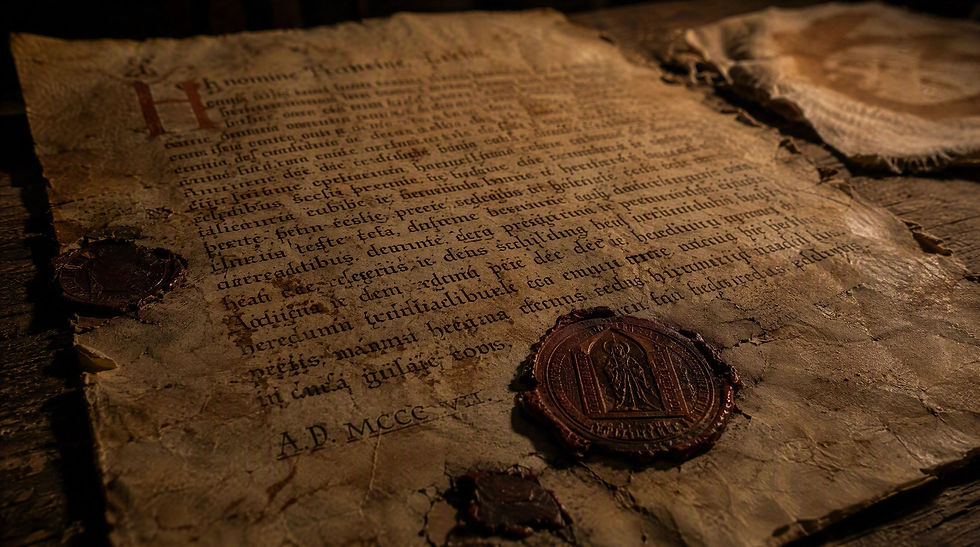
A weary printer's apprentice in the German city of Cassel stacked the final wet sheets of an anonymous pamphlet onto a wooden workbench in the early months of 1614. The ink was still fresh on a text that promised to completely overturn the religious, political, and scientific foundations of Europe. By revealing a centuries-old underground brotherhood of immortal sages. Within weeks, this small publication ignited a sweeping intellectual wildfire across a continent already teetering on the edge of a cataclysmic holy war. Sending kings, scholars, and occultists into a frantic hunt for a phantom group that no one could actually see.
This dramatic publishing event marks the historical flashpoint of what we now call the Rosicrucian Enlightenment. An era where the boundary between rational science and deep esoteric mystery completely dissolved. At the heart of this movement was the concept of the Invisible College. A clandestine network of brilliant minds who allegedly worked from the shadows to advance human knowledge without revealing their identities to corrupt authorities. Did a literal secret society of enlightened alchemists guide the birth of the modern scientific age. Or was the entire phenomenon a brilliant piece of political satire that spiraled completely out of control?
While researching this case, you can explore our complete database over on our master Secret Societies Archive.
The Anonymous Pamphlets of Hesse-Kassel
To grasp how this bizarre mystery took root. You have to look at the ground zero of the explosion. The absolute chaos of the Holy Roman Empire in the early seventeenth century. The year was 1614, and Europe was a tinderbox of religious hatred between Catholics and Protestants. Suddenly, an anonymous printing press in the principality of Hesse-Kassel released a document titled the Fama Fraternitatis. This manifesto openly proclaimed the existence of the Fraternity of the Rose Cross, a secret order of Christian reformation.
The Fama was followed closely by a second tract in 1615 called the Confessio Fraternitatis. Which threw even more fuel onto the fire. These texts didn't just ask people to join a club. They announced a total restructuring of human understanding. Merging deep spiritual mysticism with practical medical charity and physical science. The authors claimed that the brothers possessed the keys to the universe. Including the ability to heal the sick entirely for free and transmute base metals into gold.
But there was a catch that drove the European intellectual elite absolutely insane. The manifestos explicitly stated that interested applicants could not seek out the brothers directly because the order was entirely invisible to the uninitiated. Instead, hopeful scholars were told to publish their own open letters or books declaring their worthiness. The authors promised that the brothers would read these public declarations and secretly contact those who were deemed spiritually fit.
The Mythic Journey of Father Christian Rosenkreutz
The narrative core of the manifestos focused entirely on the legendary life of a figure named Father Christian Rosenkreutz. Supposedly born in 1378. According to the story. This German noble monk traveled extensively through the Middle East as a young man. Visiting hidden centers of learning in Damascus, Egypt, and Fez. In these places, he translated ancient Arabic mathematical systems and occult philosophies. Synthesizing them into a unified body of secret knowledge.
When Rosenkreutz returned to Germany. He allegedly gathered a tiny circle of three trusted companions to form the original Fraternity of the Rose Cross. They swore oaths to remain completely celibate. To practice medicine only without accepting payment, and to meet in secret once a year at a mysterious headquarters called the Spiritus Sanctus. The Fama claimed that Father Rosenkreutz eventually died in 1484 at the incredible age of 106, but his burial place was kept a strict secret by his disciples.
The real explosive hook of the story happens 120 years later, around 1604. When a later generation of brothers was doing structural renovations on their secret compound. They accidentally uncovered a hidden brass door concealed behind thick plaster. Opening it to find a magnificent, seven-sided subterranean tomb. The vault was miraculously illuminated by an artificial, ever-burning inner sun that had defied the darkness for over a century. Inside the tomb lay the uncorrupted body of Christian Rosenkreutz himself. Clutching a secret parchment book written in golden letters that contained the ultimate architectural blue-prints of the cosmos.

The Political Theater of the Heidelberg Nexus
If you want to track the actual historical reality behind this mythic tale. You have to look at the highly charged political landscape of Heidelberg. Modern historians like Dame Frances Yates blew this case wide open by showing that the Rosicrucian craze wasn't just random occult fiction. It was deeply tied to the court of Frederick V, the Elector Palatine, and his glamorous English bride, Elizabeth Stuart. Who was the daughter of King James I.
Heidelberg was essentially the intellectual capital of the Protestant resistance. A vibrant city where radical thinkers, hermetic philosophers, and alchemists gathered under Frederick's patronage. The magnificent gardens of his palace, the Hortus Palatinus. Were celebrated as a mechanical wonder of the world. Filled with hidden grottoes, moving automata, and water-powered organs. This place was a literal playground for the exact type of advanced, magical technology described in the Rosicrucian texts.
The publication of the manifestos was timed perfectly to support Frederick's bid to unite Protestant Europe against the oppressive Catholic Habsburg dynasty. The dreamers in the Heidelberg nexus genuinely believed that a new golden age was dawning. One where science and spirituality would crush tyranny. But this idealistic bubble popped in a spectacularly brutal fashion in 1620 at the Battle of White Mountain. Frederick's forces were utterly crushed by the imperial army. Forcing the "Winter King" and his court to flee into exile while Heidelberg was systematically ransacked by Catholic troops.
The Paris Placard Panic of 1623
The crushing military defeat in Germany didn't kill the Rosicrucian myth. Instead, it scattered the surviving intellectuals across Western Europe like glowing embers. The panic reached a peak of absolute high strangeness in Paris during the summer of 1623. Citizens woke up one morning to find mysterious handwritten placards posted all over the stone walls of the city.
The signs announced that the Deputies of the principal College of the Brethren of the Rose Cross were making a visible stay in the city. The placards claimed the brothers could move through space completely unseen and could speak every language on earth fluently to save mankind from error. This triggered an immediate, severe wave of public hysteria across the French capital.
People began accusing local scholars of being secret occult agents who had signed pacts with the devil to achieve invisibility. The conservative Catholic establishment launched a massive counter-offensive. Publishing angry tracts that denounced the Rosicrucians as a dangerous, heretical subversion network. Honestly, the French public became completely obsessed with trying to spot these invisible masters in the streets. Creating an atmosphere of intense paranoia that lasted for months.
Robert Boyle and the Birth of the Invisible College
As the decades rolled on and the bloodiest parts of the Thirty Years' War ground down Central Europe. The center of gravity for this mystery shifted decisively across the English Channel. By the 1640s. London was engulfed in its own civil war. Yet a small group of natural philosophers began meeting quietly to discuss experimental science. The most critical piece of written evidence from this era comes from the personal correspondence of a young Robert Boyle. The undisputed father of modern chemistry.
In several letters written between 1646 and 1647 to his friends. Boyle explicitly praises what he calls the "Invisible College" or the "Philosophical College." He notes that these men avoid traditional academic pomposity. Prioritising practical experimentation, agriculture, and chemistry over ancient dogma. They basically adopted the exact operating manual laid out in the original German Rosicrucian manifestos.
And this network didn't just exist for casual conversation over tea. It served as the literal organisational blueprint for the Royal Society of London. Which was officially chartered by King Charles II in 1660. The founding members included legendary minds like John Wilkins, Christopher Wren, and Robert Hooke. These men systematically stripped away the heavy, confusing allegories of the old alchemists while keeping the core mission intact. The collaborative, systematic investigation of the natural world for the improvement of human life.
The Tübingen Circle and the Satirical Confession
Now, if we pull back the curtain on the actual authorship of the original manifestos. We hit the trail of the Tübingen Circle. This was a tightly knit group of brilliant young Protestant theologians and thinkers centered around the University of Tübingen in Germany. The leading light of this group was a man named Johannes Valentinus Andreae. A visionary writer who later admitted that he had penned The Chymical Wedding of Christian Rosenkreutz during his youth.
Mainstream historical consensus generally views Andreae and his close companions as the masterminds behind the entire Rosicrucian mythos. Andreae was deeply frustrated by the stale, dead academic culture of his era and the horrific religious wars tearing his country apart. He essentially created a brilliant piece of ludibrium. A playful, serious joke or a literary hoax, designed to test the intellectual waters of Europe.
He wanted to see if there were like-minded scholars out there who were ready to form a real alliance for scientific and spiritual progress. But Andreae was quickly horrified by the sheer scale of the madness he had unleashed. Instead of inspiring serious scientific cooperation. His allegorical tales caused thousands of people to fall down an absolute rabbit hole of wild alchemy, treasure hunting, and occult fantasy. He spent much of his later life writing books that openly mocked the very Rosicrucian mania he had accidentally created.
The Alchemical Network of Fludd and Maier
Despite Andreae's attempts to put the genie back in the bottle. Several major European intellectuals took the Rosicrucian bait completely seriously. The most prominent defender of the order in England was Robert Fludd. A brilliant physician and mystical philosopher who published massive, beautifully illustrated volumes defending the Rose Cross against accusations of black magic. Fludd argued passionately that the Rosicrucians were real Christian philosophers who understood the hidden, harmonic proportions connecting the human body to the entire universe.
Over on the continent, a scholar named Michael Maier served as the official physician to the eccentric Holy Roman Emperor Rudolph II in Prague. Maier was deeply embedded in the fringe alchemical networks of his day and traveled extensively to England to find the elusive brethren. He published Atalanta Fugiens. An incredible alchemical emblem book that featured complex musical fugues alongside cryptic, symbolic engravings.
Maier claimed that the Rosicrucian brotherhood was real, but he argued that its members were scattered across the globe. Working independently rather than sitting together in a single secret room. It's like trying to find a specific drop of water in the ocean. They were connected by a shared intellectual frequency rather than a formal membership roster. These men kept the dream alive. Serving as a vital bridge between old-world magical thinking and the coming age of systematic observation.
Newton’s Hidden Library and the Esoteric Connection
For a long time, standard school textbooks presented the scientific revolution as a clean, sudden break from medieval superstition. But the private papers of Sir Isaac Newton completely shattered that neat narrative. When historians finally combed through Newton’s extensive unpublished manuscripts in the twentieth century. They made a mind-blowing discovery. The man who formulated the laws of universal gravitation and calculus had actually spent millions of words quietly transcribing alchemical recipes and reading Rosicrucian texts.
Newton’s personal library contained heavily annotated, dog-eared copies of both the Fama and the Confessio. Alongside works by Michael Maier and Robert Fludd. He didn't view his work on physics and his work on alchemy as separate hobbies. To his mind, they were part of the exact same quest to uncover the hidden laws that God had woven into the fabric of creation. He was operating directly on the wavelength of the Invisible College.
But this wasn't an isolated quirk of Newton’s specific genius. Elias Ashmole, the legendary antiquarian who founded the Ashmolean Museum at Oxford. Was another massive figure who sat squarely at this crossroads. Ashmole was one of the very first recorded "speculative" Freemasons accepted into a lodge. His personal diaries show that he spent years copying Rosicrucian manifests by hand. The esoteric undercurrent was literally the hidden engine driving the development of early British institutional science.
Skeptical Realities and the Optical Illusion of Secret Societies
When you subject the entire case to rigorous, cold historical criticism. The literal existence of a medieval order founded by Christian Rosenkreutz completely falls apart. There is absolutely zero archaeological or documentary evidence for the existence of the multi-generational brotherhood before the printing press in Cassel rolled out those pamphlets in 1614. The uncorrupted body. The ever-burning sun in the seven-sided vault. The grand travels to Fez. It was all pure, layered allegorical fiction.
Skeptical scholars point out that the entire phenomenon was a classic case of an optical illusion created by the printing press. Because the manifestos invited people to respond publicly. The sudden flood of books, letters, and pamphlets written about the Rosicrucians made it look like a massive, organised network existed. In reality, it was just hundreds of isolated individuals all talking to a ghost. Each seeker was projecting their own specific desires for scientific freedom or spiritual illumination onto an empty canvas.
Yet, to dismiss the Invisible College as a simple lie is to completely miss the profound impact it had on our world. It functioned as a highly successful meme. A powerful thought experiment that reshaped reality through sheer intellectual force. By acting as if the Invisible College existed. The natural philosophers of the seventeenth century eventually created a real one. Yhe international scientific community that we rely on today.
Rosicrucian Enlightenment Frequently Asked Questions
What were the original Rosicrucian manifestos?
They were three anonymous German pamphlets published between 1614 and 1616. The Fama Fraternitatis, the Confessio Fraternitatis, and The Chymical Wedding, that announced a secret brotherhood of spiritual and scientific reformers.
Did Christian Rosenkreutz actually exist?
Modern historical consensus concludes that Christian Rosenkreutz was a purely mythical, allegorical character created by German theologians to symbolise the spiritual journey and the synthesis of hidden knowledge.
What was the connection between the Rosicrucians and the Royal Society?
While the literal secret order was a myth. Early founders of the Royal Society, like Robert Boyle, used the term "Invisible College" to describe their collaborative, experimental network, directly inspired by Rosicrucian ideals.
What happened during the Paris placard panic of 1623?
Handwritten posters appeared across Paris claiming invisible Rosicrucian deputies were staying in the city, triggering widespread public obsession and paranoia regarding occult subversion.
Who wrote the Rosicrucian manifestos?
Evidence points to the Tübingen Circle, a group of Lutheran scholars led by Johannes Valentinus Andreae, who later admitted to writing The Chymical Wedding as a youthful literary joke.
Why did Isaac Newton study Rosicrucian and alchemical texts?
Newton did not see a separation between physics and alchemy; he believed studying esoteric texts could help reveal the hidden, divine laws governing the structure of matter and gravity.
Sources and Further Reading
Yates, Frances A. The Rosicrucian Enlightenment. Routledge & Kegan Paul, 1972.
Åkerman, Susanna. Rose Cross Over the Baltic: The Tsarist Connection and Early Rosicrucianism. Brill, 1998.
Churton, Tobias. The Invisible College: Royal Society, Freemasonry and the Rosicrucian Revolution. Inner Traditions, 2009.
McIntosh, Christopher. The Rosicrucians: The History, Mythology, and Rituals of an Esoteric Order. Weiser Books, 1997.
Dobbs, Betty Jo Teeter. The Foundations of Newton's Alchemy: or, "The Hunting of the Greene Lyon". Cambridge University Press, 1975.


Comments